>
QUOTE (BonzaiCelica @ Nov 24, 2009 - 6:04 PM)

>i was recently in a toyota basic electronic class at college and the professor who has been working for toyota for over 20 years, had said that small amounts of fumes evaporate from the battery. is that true??
what is the lightest car battery out there??
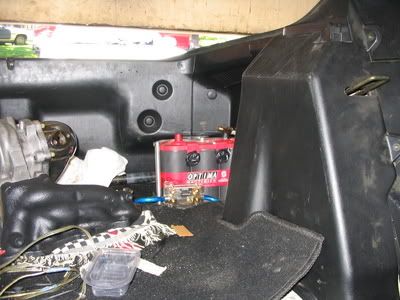
All batteries emit fumes, gel cells batteries like optimas emit less or have a chamber to capture fumes. This also the reason why on any battery that mounted inside the living space has a self contained ventilation system that vents outside the car. The smallest battery that i know which can be safely mounted inside the cabin would be the mazda miata battery. part number: U1RT; with 370 cold cranking amps rating. To put that into perspective the average toyota 35 series battery has around 550CCA and the tiny honda civic battery has around 470. This gives you an idea how much your sacrificing to save weight.
You may ask, Why do i need so much Cold Cranking Amps or power?
Well the more cranking amps your car has the easier it is to start, the more forgiving the car will be to to electrical leaks (leaving your headlights on), and the more stable the power from the alternator will be. As batteries age they produce have less power. So a small battery might be able to start your car when it was new, but as it ages it will slowly produce less and less power and you will notice a dragging starter. The temperature also affects the power of the battery.
Majority of batteries fail are during cold starts, where the age and the cold temperatures pushing batteries past the threshold leaving there owners stranded. The average life of a battery is around 3-4 years. But if you take good care of your battery I had one last up to 7 years before it would go out. This is assuming you are using the properly size battery; A smaller and less powerfull battery will expire sooner because it has to take a deeper discharges everytime you start your car.