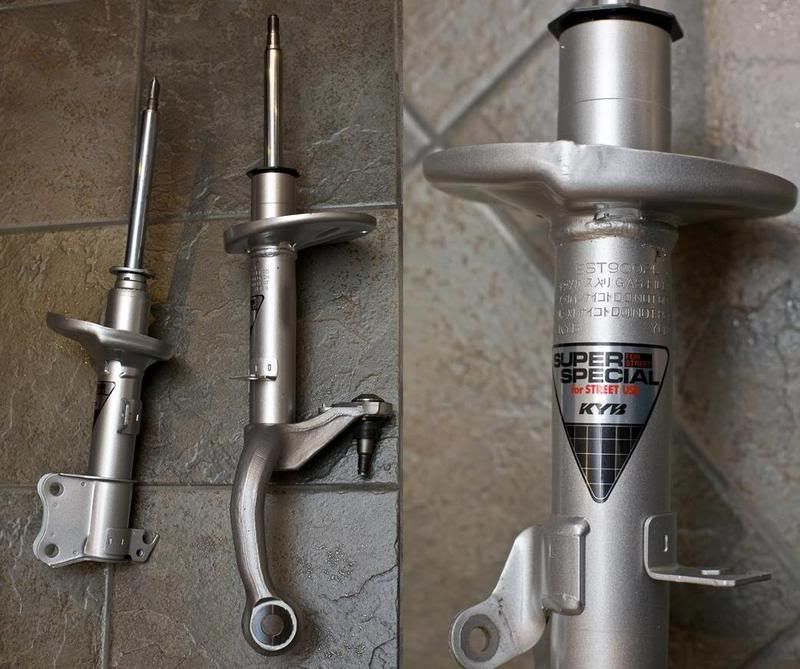
Ok, I've done some quick searching and I think I've put the pieces together.
First thing Super Strut isnt true double wishbone. Super Strut is Toyotas attempt to still have all the benefits of double wishbone but be cheaper to manufacture and also the design made it more compact and lighter. If Toyota were to put true double wishbone in the Celica 1994+ they would have had problems fitting it and would have had to spend lots of money. The good thing about super strut was the design meant it could be installed into the other ST20# series with little modification and saved Toyota alot of money.
I totally disagree, thats where and why super strut first began. Super strut suspension was developed for use by Toyota in the ST205 rally car, Yes the WRC Celica would have been different (obviously adjustable suspension), they wouldn't have left it standard lol. But the rally car still had the super strut though, so it would have had the same problems as standard road super strut. Due to its design the suspension failed as it could not keep up with the high demands. Creating problems for the team as they would have had to keep maintaining the suspension rather than repairing crash damage and other things. (So they reverted back to conventional Macpherson strut for reliability reasons.)
Its purpose is to minimise camber change throughout the travel of the suspension (when going over sweet jumps ).
).
All joints in the super strut system are prone to wear, usually the camber (A.) and no1 control arm (B.) are the first and most common to wear, although the lower control arm no2 (C.) can also wear out the rear bush where it mounts to the body. This bush is not sold separately by Toyota. The top ball joint (D) also wears.
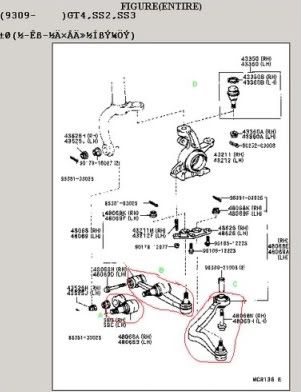
For A and B typical replacement kilometres is around 80-120k. but driving style and suspension set up and roads driven on can alter that.
Aftermarket and rebuilt ball joints tend to not last as long, often requiring replacement within 6 months. Even sooner with stiffer springs and shocks by putting more stress on the joints. (So how much is that going to cost you in the long run to maintain it???)
Came across a checklist for checking Super strut. Since it has extra linkages. It causes some issues when trying to diagnose noises in the suspension as it can be hard to pin point which joint has worn.
>
The Honda civic 7th gen, they went back to mac because of cost and double wishbone was too big/heavy for them to fit the new bigger and better k series motor in. You mainly see double wishbone on north-south engines e.g. skylines because there is more room on the sides. The DC5 is a good track car, its a jump in race car, never heard any problems with it.
Yes the 7gen Celica an quite a few other Toyota models were available in super strut.
not true, the opposers are people who have super strut, and have to deal with the cost and problems it creates
well thats what found and think
p.s BonzaiCelica you better start ordering a couple of sets of replacement bushes when u buy your s/s since it's a 6 week wait in postage
First thing Super Strut isnt true double wishbone. Super Strut is Toyotas attempt to still have all the benefits of double wishbone but be cheaper to manufacture and also the design made it more compact and lighter. If Toyota were to put true double wishbone in the Celica 1994+ they would have had problems fitting it and would have had to spend lots of money. The good thing about super strut was the design meant it could be installed into the other ST20# series with little modification and saved Toyota alot of money.
I totally disagree, thats where and why super strut first began. Super strut suspension was developed for use by Toyota in the ST205 rally car, Yes the WRC Celica would have been different (obviously adjustable suspension), they wouldn't have left it standard lol. But the rally car still had the super strut though, so it would have had the same problems as standard road super strut. Due to its design the suspension failed as it could not keep up with the high demands. Creating problems for the team as they would have had to keep maintaining the suspension rather than repairing crash damage and other things. (So they reverted back to conventional Macpherson strut for reliability reasons.)
Its purpose is to minimise camber change throughout the travel of the suspension (when going over sweet jumps
).All joints in the super strut system are prone to wear, usually the camber (A.) and no1 control arm (B.) are the first and most common to wear, although the lower control arm no2 (C.) can also wear out the rear bush where it mounts to the body. This bush is not sold separately by Toyota. The top ball joint (D) also wears.
For A and B typical replacement kilometres is around 80-120k. but driving style and suspension set up and roads driven on can alter that.
Aftermarket and rebuilt ball joints tend to not last as long, often requiring replacement within 6 months. Even sooner with stiffer springs and shocks by putting more stress on the joints. (So how much is that going to cost you in the long run to maintain it???)
Came across a checklist for checking Super strut. Since it has extra linkages. It causes some issues when trying to diagnose noises in the suspension as it can be hard to pin point which joint has worn.
>
QUOTE
>CHECKING SUPERSTRUT SUSPENSION
- Jack up front of car, remove front wheels.
- take hold of the spring perch (where the bottom of the spring sits) with both hands.
- try to twist the strut.
If the strut doesn't twist, the super strut joints on that side are ok.
If the strut twists (you should be able to see movement in the short s/s arm joints)....
- 1-2mm (measured at the edge of the spring perch) means it will probably pass a warrant but will need replacing quite soon. You might be able to just notice the car wandering a bit when driving over changing road camber or when braking/accelerating.
- more than 2 mm it will probably fail a warrant, it will need replacing. The car will wander over changing road surfaces and change direction noticeably when accelerating or braking. You will know something is wrong!
S/S joints have a huge load on them, from accelerating, braking and going over bumps. The front s/s control arm has a short arm that connects to the suspension strut. The suspension strut has a ball joint that locates the top of the steering knuckle/hub. If the joints at either end of the short arm become worn the suspension strut can rotate. If it rotates it causes the top of the steering knuckle to move forwards or backwards (due to bumps, accelerating or braking). This causes the wheel to point out a bit or in a bit, causing the car to wander left or right without you moving the steering wheel. This can be very dangerous!
STRANGE NOISES?
Creaking noise? Often in Super strut cars the creaking isn't the lower link arm. I've driven a GTZ with super strut with totally rooted lower link arm and it didn't make a noise! It just wandered across the road!
If the lower link arm is shagged - only put in Toyota genuine new!!! Anything else wears out in about 5,000km! (Cost might be a bit more but you won't regret it.)
- Jack up front of car, remove front wheels.
- take hold of the spring perch (where the bottom of the spring sits) with both hands.
- try to twist the strut.
If the strut doesn't twist, the super strut joints on that side are ok.
If the strut twists (you should be able to see movement in the short s/s arm joints)....
- 1-2mm (measured at the edge of the spring perch) means it will probably pass a warrant but will need replacing quite soon. You might be able to just notice the car wandering a bit when driving over changing road camber or when braking/accelerating.
- more than 2 mm it will probably fail a warrant, it will need replacing. The car will wander over changing road surfaces and change direction noticeably when accelerating or braking. You will know something is wrong!
S/S joints have a huge load on them, from accelerating, braking and going over bumps. The front s/s control arm has a short arm that connects to the suspension strut. The suspension strut has a ball joint that locates the top of the steering knuckle/hub. If the joints at either end of the short arm become worn the suspension strut can rotate. If it rotates it causes the top of the steering knuckle to move forwards or backwards (due to bumps, accelerating or braking). This causes the wheel to point out a bit or in a bit, causing the car to wander left or right without you moving the steering wheel. This can be very dangerous!
STRANGE NOISES?
Creaking noise? Often in Super strut cars the creaking isn't the lower link arm. I've driven a GTZ with super strut with totally rooted lower link arm and it didn't make a noise! It just wandered across the road!
If the lower link arm is shagged - only put in Toyota genuine new!!! Anything else wears out in about 5,000km! (Cost might be a bit more but you won't regret it.)
The Honda civic 7th gen, they went back to mac because of cost and double wishbone was too big/heavy for them to fit the new bigger and better k series motor in. You mainly see double wishbone on north-south engines e.g. skylines because there is more room on the sides. The DC5 is a good track car, its a jump in race car, never heard any problems with it.
Yes the 7gen Celica an quite a few other Toyota models were available in super strut.
not true, the opposers are people who have super strut, and have to deal with the cost and problems it creates
well thats what found and think
p.s BonzaiCelica you better start ordering a couple of sets of replacement bushes when u buy your s/s since it's a 6 week wait in postage
ST202 SS-II CELICA threadNew Zealand members check inSticky thread's: How to contribute and troubleshoot.


 .
.