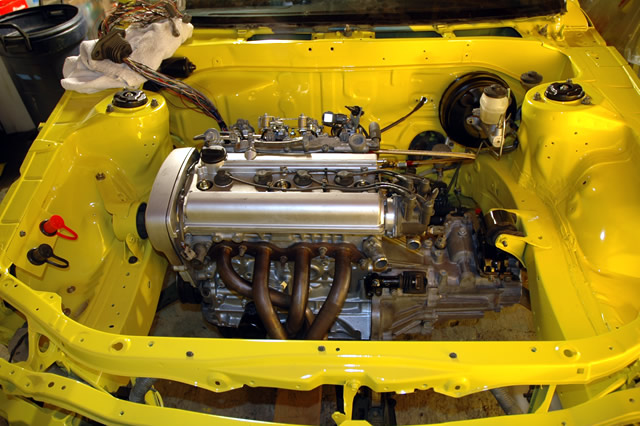
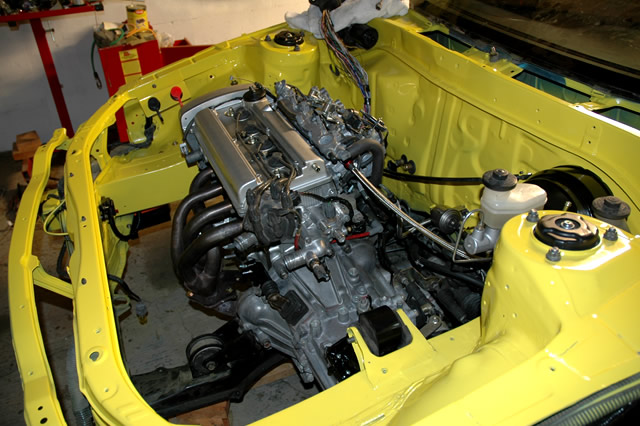
Oh man, I want to drive my car so badly! I really hope my flywheel bolts make it here by Saturday so I can get the motor back in.
Anyway, I'm super bored and killing time until I get off work so I figured I'd post a few random tips that I've learned throughout the project.
1. If you crush an end of the heater core solid metal tubing, you can straighten it out by pounding in a socket and then using a ratchet to grab the socket and turn it out. I used a couple smaller sockets at first and found that a 1/4"-drive 7/16" deep socket worked perfectly for the final shaping of the tube. Just make sure you're able to get a locking ratchet (my Craftsman ratchet has a button that must be pressed to release a socket from the end of it) onto the socket, or it may be stuck in the tubing forever.
2. When putting the windshield wiper motor back in, it's easiest to do with the interior blower assembly out of the car (if the dash is already off.) This way, you can have somene inside the car reach through the hole and press the wiper linkage arm onto the wiper motor while someone outside holds the wiper motor in place.
3.
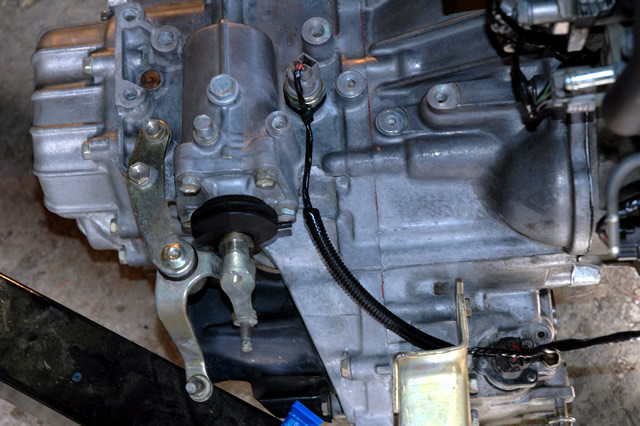
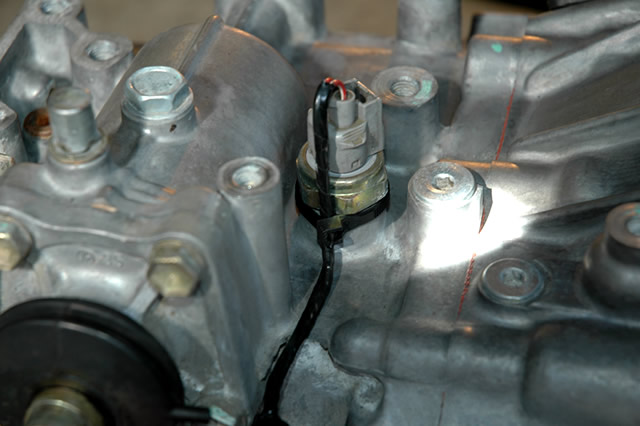
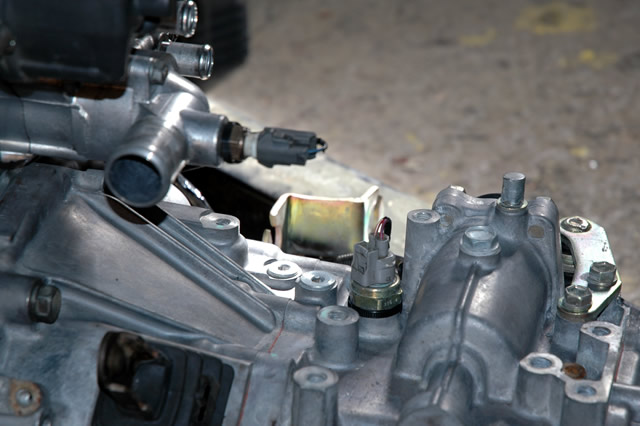
3M Super 33+ electrical tape is awesome...well worth the price in my opinion because it's high-quality tape.
4. If you're doing a big project like this,
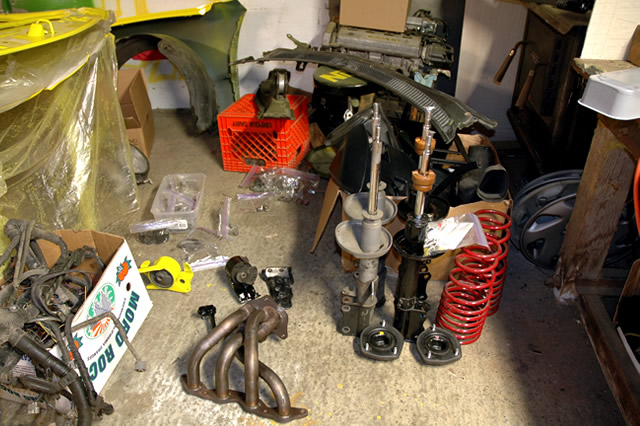
keep your garage organized. Every day when I'm done working I spend 5-15 minutes putting everything away and cleaning stuff up. It's so much easier to work in a clean environment. And speaking of putting stuff away, I have several plastic containers that I got for $0.80 a piece at the store. One is for vacuum lines, caps, clamps, etc., one is for small-gauge wiring, one is for large-gauge wiring, one is for diodes, electrical connectors, relays, etc., one is for misc. hardware like extra brackets, one is for my soldering iron, solder, and heat shrink tubing, one is for misc. screws, one is for non-Toyota metric hardware, etc. You can kind of see them here:
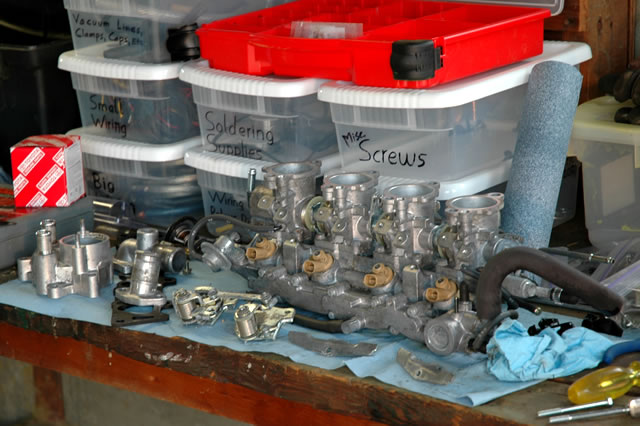
Also, the red box has several compartments. One for 10mm bolts, one for 10mm nuts, another for Toyota non-10mm bolts and nuts, one for small washers, one for large washers, one for lock washers, one for #8 screws, one for #10 screws, one for Toyota 10mm head screws, one for special hardware like Banjo bolts, etc. My dad says I'm
OCD, but I say I'm just organized.

5.
Put removed bolts and small parts in Zip-Loc bags and label them. I have at least 40-50 labeled Zip-Loc bags in a box so that I can remember what hardware and parts are used for what. Examples of a few bags include pressure plate bolts, transmission bolts, hardware for the clutch pedal, front bumper bolts, etc.
6. When you go out to get misc. small parts, a lot of places prefer to deal in cash, so bring cash. They often won't charge you tax and will just give you parts for a flat rate. For example, when I got my last brake line, the guy at the radiator/fabrication shop said "cash or charge?" When I said cash he told me to just give him $5 and we'd call it good. I've had similar experiences at the local mom-and-pop hardware store (which has a WAY bigger selection of hardware than Lowe's/Home Depot by the way) and the junkyard. Those guys are busy and if they don't have to deal with the credit card machine, writing receipts, etc., they'll be happier.
That's all for now...there's not a whole lot on the car that can be done until I get the motor in. I want to ensure my wiring is working before I put the interior back in and a lot of the remaining stuff will require that the motor be back in the car.



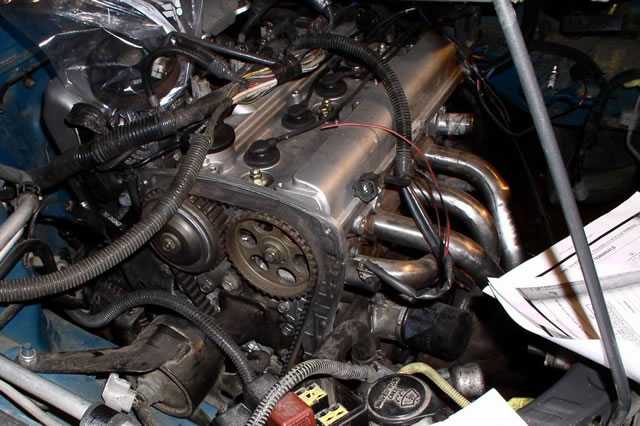
 And so will the mount on the other side.