Over 1M Posts • 84K Topics • 9K Authors

3S-GE ACIS/Beams discussion - 6G Celicas Forums

Topic #61995 114 posts Started by delusionz
>
QUOTE (Rusty @ Aug 8, 2008 - 3:30 PM) *
>thats alright

>
QUOTE
>how would i go about modding my ACIS?

rather than tell you how to mod it heres a way how not to mod it smile.gif
http://toymods.net/forums/showthread.php?t...;highlight=ACIS

(also I recommend a new thread for 3SGE ACIS/Beams discussion)


I've been playing around with ACIS recently and I've discovered a few things about it,

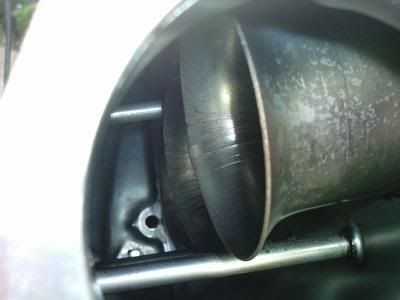
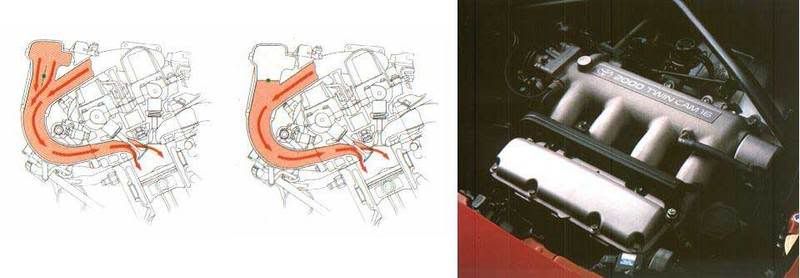
The basics ... when the vacuum diaphragm pulls the throttles, the larger diameter in the corner of the inlet pipes open up (under the lid) for high rpm and when there is no vacuum to pull the throttles are free to return to the constricted low rpm position.

A few problems noted with ACIS:

1. When switching between high and low rpm modes, the vacuum diaphragm sometimes get stuck in the high rpm mode
2. The engage point is too late

First experiment was to see how the car behaved with the throttle pull lever tied up with cable ties as to lock the throttles in the high rpm position,

What I observed with the butt dyno was that under full throttle the rpm range where the car would "suddenly get up and go" was lower down, noticed in terms of road speed 65kph before, 55kph after (2nd gear) so in other words 5000-7000 was the get up and go range, without ACIS constriction in the intake the get up and go range was observed from 4000 to 7000.

No loss in acceleration was noticed from idle to 3000 under part throttle, but loss was noticed under full throttle, between 3000 and 4000 I couldn't tell either way in neither part throttle nor full throttle whether ACIS was better in low rpm or high rpm mode....

This suggests to me that 4000 is a better changeover point than 4800 for performance. 4800 is an rpm not reached by normal driving due to speed limits & gear selection thus ACIS seems to exist for the purpose of keeping intake noise down at legal road speeds rather than for improving low rpm torque as midrange torque takes a hit with this setup.

My proposed solution on how TO mod the ACIS, is to gutt the vacuum actuator system and replace it with a motorised cable pulling actuator triggered by a frequency switch relay at 4000 rpm the signal could be obtained by the ignitor right behind there.

Mike W1996 Toyota Celica ST205 GT-FOURGT2860RS turbine, TiAL mvr44, JE 86.5φ piston, Clutchmasters FX400, APEX P-FC269awhp / 273ft-lbs
ha sweet finally started a thread, I'd thought I'd start with some Information. This is theory of ACIS

-Wikipedia+
QUOTE (Wikipedia)
Acoustic Control Induction System, or ACIS, is an implementation of a Variable Length Intake Manifold system designed by Toyota.

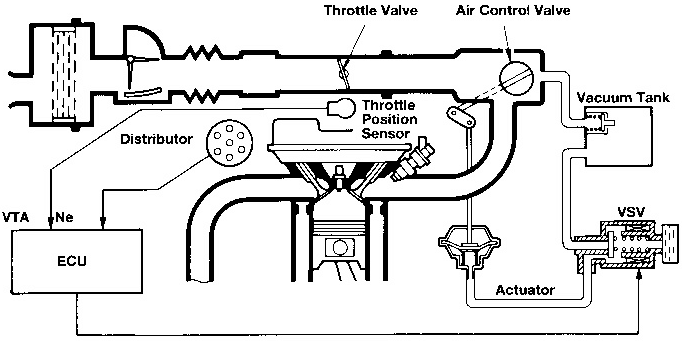
Simply put, the ACIS system uses a single intake air control valve located in the intake to vary the length of the intake tract in order to optimize power and torque, as well as provide better fuel efficiency and reduce intake "roar".[1].

The ECU controls the position of the intake air control valve based on input signals from throttle angle and engine RPM. The vacuum switching valve (VSV) which controls the vacuum supply to the actuator is normally closed and passes vacuum to the actuator when it is energized by the ECU. By energizing the VSV vacuum is passed to the actuator, closing the air control valve. This effectively lengthens the intake manifold run. By de-energizing the VSV, vacuum to the actuator is blocked and trapped vacuum is bled off of the actuator diaphragm. Without vacuum, the air control valve opens, effectively shortening intake runner length[1]. This logic is the same as that used on the T-VIS system, the primary difference being that T-VIS actuates at a set RPM value whereas ACIS attempts to maintain a constant powerband by opening progressively.


Anyone who says that ACIS uses compression is WRONG or says it has a form of VVT is WRONG

>
QUOTE
>Toyota Variable Induction System, or T-VIS, is a variable intake system designed by Toyota.

It improves the low-end torque of high-performance, small displacement four-stroke engines by changing the geometry of the intake manifold according to the engine rotation speed. The system uses two separate intake runners per cylinder, one being equipped with a butterfly valve that can either open or close the runner. All valves are attached to a common shaft which is rotated by a vacuum actuator outside the manifold.

The engine control unit allows vacuum into the actuator by powering a solenoid valve when the engine rotation speed is below 4200 rpm.Above this engine speed vacuum is cut off and a spring inside the actuator causes the butterfly valve to fully open. The theory behind the system is that in the lower speed band the velocity of the intake air can be improved because the intake runner cross section per cylinder is smaller. However, when the engine gains speed, the required air flow volume is more significant so the second runner is opened to improve the flow. With upgraded engines (more flow) you may want to have your T-VIS open earlier than stock because it begins to choke the airflow at a lower RPM, since the airflow per RPM is greater with upgraded turbos, intakes, and exhaust. There is now a T-VIS controller on the marketT-VIS controller.


>
QUOTE
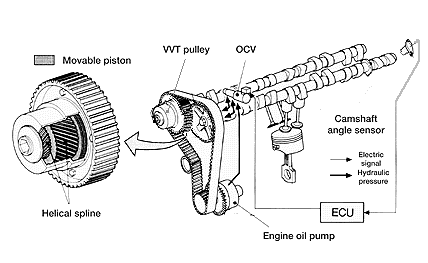
>VVT-i, or Variable Valve Timing with intelligence, is an automobile variable valve timing technology developed by Toyota, similar to the i-VTEC technology by Honda. The Toyota VVT-i system replaces the Toyota VVT offered starting in 1991 on the 4A-GE 20-Valve engine. The VVT system is a 2-stage hydraulically controlled cam phasing system.

VVT-i, introduced in 1996, varies the timing of the intake valves by adjusting the relationship between the camshaft drive (belt, scissor-gear or chain) and intake camshaft. Engine oil pressure is applied to an actuator to adjust the camshaft position. In 1998, "Dual" VVT-i (adjusts both intake and exhaust camshafts) was first introduced in the RS200 Altezza's 3S-GE engine. Dual VVT-i is also found in Toyota's new generation V6 engine, the 3.5L 2GR-FE V6. This engine can be found in the Avalon, RAV4, and Camry in the US, the Aurion in Australia, and various models in Japan, including the Celica. Dual VVT-i is also used in the Toyota Corolla (1.6 dual VVT-i 124bhp). Other Dual VVT-i engines include the 1.8L 2ZR-FE I4, used in Toyota's next generation of compact vehicles such as the Scion XD. It is also used in the 2JZ-GE and 2JZ-GTE engines used in the Lexus IS300 and in the Toyota Supra. By adjusting the valve timing engine start and stop occurs virtually unnoticeably at minimum compression. In addition fast heating of the catalytic converter to its light-off temperature is possible thereby reducing hydrocarbon emissions considerably. VVT-i Video


>
QUOTE
>In 1998, Toyota started offering a new technology, VVTL-i, which can alter valve lift (and duration) as well as valve timing. In the case of the 16 valve 2ZZ-GE, the engine has 2 camshafts, one operating intake valves and one operating exhaust valves. Each camshaft has two lobes per cylinder, one low rpm lobe and one high rpm, high lift, long duration lobe. Each cylinder has two intake valves and two exhaust valves. Each set of two valves are controlled by one rocker arm, which is operated by the camshaft. Each rocker arm has a slipper follower mounted to the rocker arm with a spring, allowing the slipper follower to move up and down with the high lobe without affecting the rocker arm. When the engine is operating below 6000 rpm, the low lobe is operating the rocker arm and thus the valves. When the engine is operating above 6000 rpm, the ECU activates an oil pressure switch which pushes a sliding pin under the slipper follower on each rocker arm. This in effect, switches to the high lobe causing high lift and longer duration.


Toyota has now ceased production of its VVTL-i engines for most markets, because the engine does not meet Euro IV specifications for emissions. As a result, some Toyota models have been discontinued... Celica

ST202 SS-II CELICA threadNew Zealand members check inSticky thread's: How to contribute and troubleshoot.
that is good information and makes things alot simpler to mod the ACIS, so instead of mechanically operating the ACIS throttles, I need to locate the vacuum solenoid valve and send my own power signals to it.

as for the claim that it attempts to maintain a constant power band, this is all fine and dandy if it were true, as noticed it gets stuck in the high rpm position alot even when coming to a complete stop and then starting again, flooring the pedal from a low speed in 2nd gear and listening to the full rpm range. Sometimes the vacuum will be pulling the acis throttles when the motor starts, looking in the engine bay, turn off the motor and turn it on again and it will be back in the low rpm position... these characteristics are surely not as intended, possibly due to having a different air filter setup, either way I'd say 4000 makes a better point to engage the short path.

the 2nd big power surge is still equally noticed as before at around 80kph in 2nd gear whether the short path is forced or not.

Mike W1996 Toyota Celica ST205 GT-FOURGT2860RS turbine, TiAL mvr44, JE 86.5φ piston, Clutchmasters FX400, APEX P-FC269awhp / 273ft-lbs
IMO the best way to find the "switching" point would be much like the 3sgte guys do the tvis opening thing.

back to back dyno runs, one with it open, one with it closed.
the point where the 2 runs overlap is the ideal switching point.

thread moved.

Former Team 5SFTE pro member ;)13.6@108MPH, 5SFTE Powered
ah here's the information I was thinking of previously: http://www.turbomr2.com/MR2/Reference/TVIS/TVIS.htm


191.23 Nm / 4800 rpm (almost 100Nm a litre) & the switch over is 5100rpm or 5200rpm, also I'm not 100% sure about this but during the switch over it advances timing, by a ECM (electric control module) or ECU?, I like your idea about taking 2 dyno runs (open and closed)

and finally (thanks to the guys from CelicaTech) The Ultimate 3S-GE Tuning Guide biggrin.gif biggrin.gif

This post has been edited by Rusty: Jun 24, 2009 - 12:52 AM

ST202 SS-II CELICA threadNew Zealand members check inSticky thread's: How to contribute and troubleshoot.
ACIS Modification project
-------------------------------

Parts required:

A spare vacuum solenoid valve, some length of automotive wire, and this Jaycar kit (Frequency Relay Switch) ---


Soooooo.... The standard engage point for ACIS is roughly 4800 RPM, the point where it goes niiiiiiiiiiiiiiiiiiiiiiiiiBWARRRRRRRRRRRRRRRRRRRR, in 2nd gear and the tachometer lunges past the 5k mark (65kph) and the car gains speed as though the pedal wasnt floored before but now it is....

Now that my custom ACIS RPM-adjustable controller project is complete, I set out to test it out at a tiny bit over 4k... And the results are amazing.... the same speed jump at the 5k mark is observed at the 4k mark (52kph)..........

I've recorded a video which I think demonstrates this (not dyno proof, but judge for yourself)...

Sorry about the first 30 seconds of engine braking, the rest of it is a motorway run testing out the 4k engage point with 2nd and 4th gears.... 2nd gear 4k is 55kph, 4th gear 4k is 110kph


notice the speed jumps at .... (with the video timer counting down) -00:45s. -00:27s, -00:17s

This post has been edited by delusionz: Sep 29, 2008 - 6:40 AM

Mike W1996 Toyota Celica ST205 GT-FOURGT2860RS turbine, TiAL mvr44, JE 86.5φ piston, Clutchmasters FX400, APEX P-FC269awhp / 273ft-lbs
i say try another vid but go in a straight line, the 45 sec one you can hear a change but not see it because the camera is looking at the fuel guage.

and start from say 3 grand in 3rd, then let it rev right out to 6 grand or so, so we get a good idea how fast the needle was moving before acis (just kicked in yo tongue.gif) and after it was open.


edit: did see the speed jump, but i say go again, and in straight line.

This post has been edited by Cuts_the_Pilot: Sep 29, 2008 - 8:27 PM

ST205 Group A Rallye GT-Four, #61 of 77............600hp GT3582rGRX133 Toyota Mark X 350s
>
QUOTE
>i say try another vid but go in a straight line, the 45 sec one you can hear a change but not see it because the camera is looking at the fuel guage.
...lol not being mean or anything, but that sound quite funny.


looks really impressive and sounds even better, but your not using foot-tech aswell are you?

and I say go for a dyno for asap, because I'd expect to see a big gain where i see a dip in the power curve (which I thing is about 5,000rpm anyway)

ST202 SS-II CELICA threadNew Zealand members check inSticky thread's: How to contribute and troubleshoot.
yeah, i had the pedal pressed as hard as i could around the changeover, I tried again with 3800 RPM engage point and between 4k and 4.5k it became slow and sounded ****... sounded like low rpm flooring, I managed to fine tune it today (stupid tiny potentiometers) to 4300 RPM and its even better, also changed that hideous light bulb for a discreet blue led, it might become permanent actually...

I'm pretty keen for a before and after dyno, how much did yours cost rusty?

Mike W1996 Toyota Celica ST205 GT-FOURGT2860RS turbine, TiAL mvr44, JE 86.5φ piston, Clutchmasters FX400, APEX P-FC269awhp / 273ft-lbs
I am real interested in seeing two dyno runs with your set up.

If it works you should post up your full set up so people like me can copy smile.gif.

1994年 トヨタ 神々しいMy FacebookMy BeboQUOTE (loll6g @ Nov 6, 2008 - 5:53 AM)automatics are for lazy ass drivers who jst want there car so that they can look cool
well I got mine done at lodge auto for $60 but we entered as a group and got a slight discount

ST202 SS-II CELICA threadNew Zealand members check inSticky thread's: How to contribute and troubleshoot.
Hmmm 4300 is very smooth to changeover, no jump in speed, I got it right on the 4000 mark now and it kicks in yo tongue.gif

This project still needs some more work though, especially with the vacuum routing, The throttles are flicking open and then closed and then is subject to the factory VSV's opening and closing as I've simply spliced into the standard setup (the main reason for doing so was to force the throttles closed at low rpm as they seemed happy to stay open from idle giving me occasional sluggish low rpm acceleration), Perhaps unplugging from the standard VSV and rejoining with a hose coupling would smooth out the irateness of my ECU without it erroring.

I also need to splice onto a permanent RPM signal place, I'm just plugged into the diagnostic box at the moment, I'm sure the dyno guys will want to use the diagnostic plug...

Mike W1996 Toyota Celica ST205 GT-FOURGT2860RS turbine, TiAL mvr44, JE 86.5φ piston, Clutchmasters FX400, APEX P-FC269awhp / 273ft-lbs
Right there has been some recent discussion lately about the 3S-GE so I thought I'd do my bit and best inform people with what information I know.

I've already stated this in another topic but I'll add it here now anyway
>
QUOTE
>Camshaft Sizes
2. Gen 3S-GE
In: 244deg, 8.5mm lift (timing 7/57) Valve diameter: 33.5mm
Ex: 244deg, 8.5mm lift (timing 57/7) Valve diameter: 29.0mm

2. Gen 3S-GTE
In: 236deg, 8.2mm lift (timing 8/ ) Valve diameter: 33.5mm
Ex: 236deg, 8.2mm lift (timing 56/0) Valve diameter 29.0mm


3. Gen 3S-GE A/T
In: 240deg, 8.7mm lift (timing 7/53) Valve diameter: 33.5mm
Ex: 240deg, 8.2mm lift (timing 53/7) Valve diameter: 29.0mm

3. Gen 3S-GE M/T
In: 252deg, 9.8mm lift (timing 7/65) Valve diameter: 33.5mm
Ex: 240deg, 8.2mm lift (timing 53/7) Valve diameter: 29.0mm


3 Gen 3S-GTE
In: 240deg, 8.7mm lift (timing 7/53) Valve diameter: 33.5mm
Ex: 236deg, 8.2mm lift (timing 50/6) Valve diameter: 29.0mm


4 Gen BEAMS Redtop 3S-GE
IN: 256deg, 10.5mm lift (timing /) Valve diameter: 34.5mm
EX: 244deg, 9.2mm lift (timing /) Valve diameter: 29.5mm

4 Gen 3S-GTE
IN: deg, .mm lift (timing /) Valve diameter: .mm
EX: deg, .mm lift (timing /) Valve diameter: .mm

**please note no newer gen camshaft are interchangeable with gen 1 3S engines (ie gen1 with gen3 cams = no. however gen1 3sgte with gen1 3sge = yes)


>
QUOTE
>Compression
2 Gen 3SGTE
8.8:1

3 Gen 3SGE A/T
10.3:1

3 Gen 3SGE M/T
10.3:1

3 Gen 3SGTE M/T
8.5:1

4 Gen (RED BEAMS) 3SGE A/T
11:1

4 Gen (RED BEAMS) 3SGE M/T
11:1


now 3.gen 3sge uses MAP while the 4.genR 3SGE uses MAF this thread has some good info relating to that.

that'll do for now more tomorrow

**please note all figures above are based on Japanese celica models**

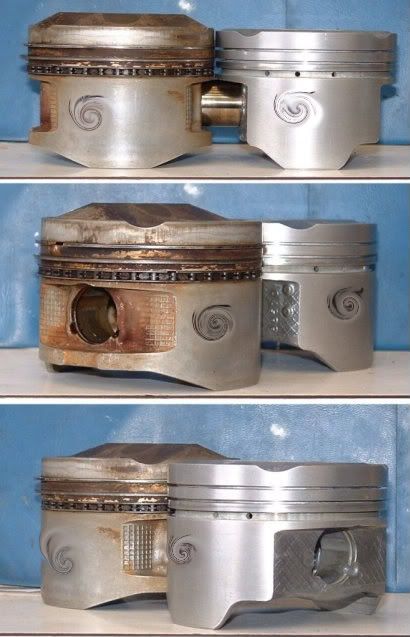
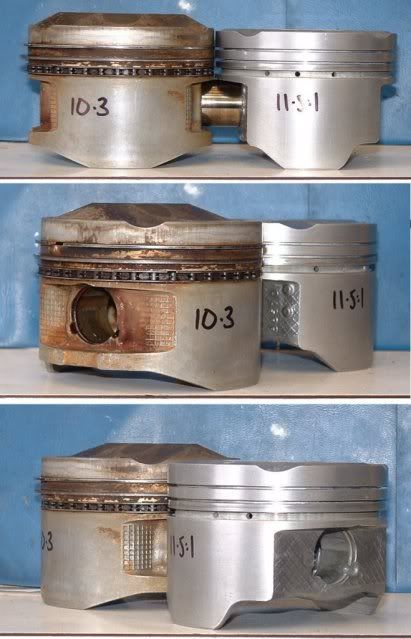
here's something to think over, which piston is which gen 3S-GE?


This post has been edited by Rusty: Dec 3, 2010 - 5:48 PM

ST202 SS-II CELICA threadNew Zealand members check inSticky thread's: How to contribute and troubleshoot.
I love games!! I take it the clean piston is from a 3rd gen. Dirty one is from the 4th gen...

(\__/)(='.'=) This is bunny. Copy and paste bunny into your(")_(") signature to help him gain world domination.
My guess is the dometop ones on the left are BEAMs pistons due to the increased compression

ENGINE: '93 RC 3S-GTE/WRC CT-20b [18-20PSI]PERF: TRD/HKS/ARP/NGK/MSD/ACT/Blitz/STRI/APEX'i/TwosRus/GReddy/Magnaflo/KOYOSUSP: Tein/Bilstein/SusTech/INT: SS-III SEATS/Toyota Hyper SportsEXT: WRC/TRD/404QUOTE (lagos @ Aug 25, 2010 - 10:13 AM)Its a safety feature so that people like you don't end up killing themselves or everyone around them.Slow down Paul Walker.6GC Chat - Go there: [url="http://www.griffgirl.com/forum/chat/index.php[/url]
tongue.gif the dirty one is the gen 3, the clean one is a BEAMS piston


ST202 SS-II CELICA threadNew Zealand members check inSticky thread's: How to contribute and troubleshoot.
LOL - If you call THOSE dirty pistons you should see the ones I pulled from my '93 3S-GTE tongue.gif

ENGINE: '93 RC 3S-GTE/WRC CT-20b [18-20PSI]PERF: TRD/HKS/ARP/NGK/MSD/ACT/Blitz/STRI/APEX'i/TwosRus/GReddy/Magnaflo/KOYOSUSP: Tein/Bilstein/SusTech/INT: SS-III SEATS/Toyota Hyper SportsEXT: WRC/TRD/404QUOTE (lagos @ Aug 25, 2010 - 10:13 AM)Its a safety feature so that people like you don't end up killing themselves or everyone around them.Slow down Paul Walker.6GC Chat - Go there: [url="http://www.griffgirl.com/forum/chat/index.php[/url]
something form wiki

>
QUOTE
>These are common to all 3S-G engines.
Capacity 1,998 cc (121.93 cu in)
Bore x Stroke 86 mm (3.39 in) x 86 mm (3.39 in)
Intake Valve Diameter 33.5 mm (1.32 in)
Exhaust Valve Diameter 29.0 mm (1.14 in)
Included Valve Angle 44.5 °


right onto the info for 3gen and 4gen 3S-GE engines

The Sump
>
QUOTE
>Gen3
The sump is 2 pieces, with a large alloy part bolted to the block & a very small pressed steel piece below it.
Gen4
Same as Gen 3.


Oil Filter Location
>
QUOTE
>Gen3
The oil filter is down on the alloy intermediate sump.
Gen4
Same as Gen 3.


Cyclinder Head
>
QUOTE
>Gen3
The cylinder head has the valve clearance shims under the bucket.
Gen4
The cylinder head is Gen 3 type but has variable cam timing on the inlet only. The cam cover is red & has the word “beams” in silver script.


ST202 SS-II CELICA threadNew Zealand members check inSticky thread's: How to contribute and troubleshoot.
so it sounds as if most of internals from 3rd and 4th gen 3sge are the same. Is the vvti what adds ahd 20 hp difference between the motors???

Group buy to replicate Narrow E series transaxle partshttp://www.6gc.net/forums/index.php?showto...p;#entry1107514
its also the increase in compression (from 10.3 to 11) and the ECU, I would think

ST202 SS-II CELICA threadNew Zealand members check inSticky thread's: How to contribute and troubleshoot.
>
QUOTE
>Redtop Specifications

VVT-I = Variable Valve Timing - Intelligent

Intake cam is VVT-I enabled

Aerodynamic volume displacement (cc) = 1998

Piston bore vs stroke (mm×mm) = 86.0×86.0

Compression ratio = 11:1

Rod pin diameter = 22mm

Rod big end bore = 51mm

Rod big end width = 21mm

Rod lendth to center = 138mm

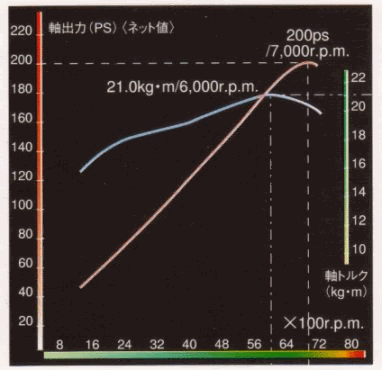
The highest output (ps/rpm) = 200/7,000

Largest torque (kg-m/rpm) = 21.0/6,000

Injector size = 315cc

Cylinder head chamber compression = 33-34cc

Buckets/lifters = 31mm

Intake Valve Diameter: 34.5mm

Exhaust Valve Diameter: 29.5mm


(inside the intake manifold past the TB)


someone has made 240whp (but thats with a blacktop, not a redtop)

thats almost as far as I get with the BEAMS 3S-GE info (there is a repair manual floating around but costs $100, and since I dont have that engine I dont really need it) onto the 3gen, though some info still applies

This post has been edited by Rusty: May 25, 2011 - 3:18 AM

ST202 SS-II CELICA threadNew Zealand members check inSticky thread's: How to contribute and troubleshoot.
this from Toyota: The 3rd Generation 3S-GE:

>
QUOTE
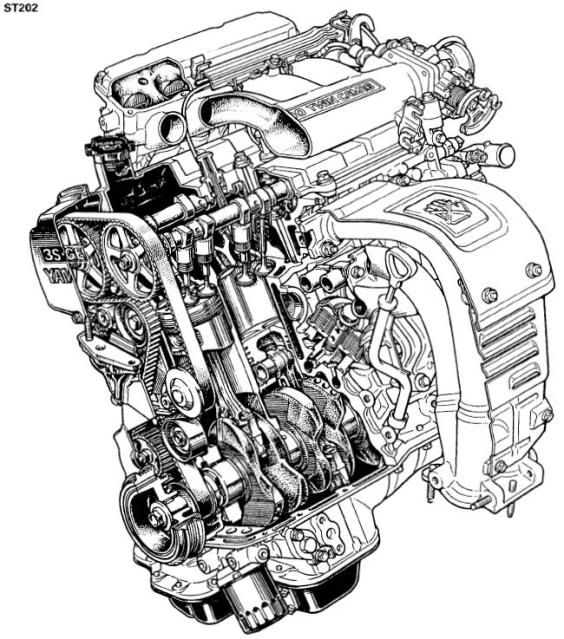
>The 3S-GE is an in-line 4 cylinder engine with the cylinders numbered 1-2-3-4 from the front. The cranshaft is supported by 5 bearings inside the crankcase. These bearings are made out of alumium alloy.
The crankcase is integrated with 8 weights for balance. Oil holes are placed inthe centre of the crankshaft to supply oil to the connecting rods, pistons and other components.
The ignition order is 1-3-4-2. The cylinder head is made of of [haha they made a typo] an aluminum alloy, with a cross flow type intake and exhaust layout with a pent roof type combustion chambers. The spark plugs are located in the centre of the combustion chamber.
The intake manifold has 4 independent long ports and utilises the intertial supercharging effect to improve engine tourque at low and mudium speeds.
Both the intake and the exhaust camshafts are driven by a single timing belt. The cam journal is supported at 5 places between the valve lifters of each cylinder and on the front end of the cylinder head. Lubrication of the cam journal and cams is accomplished by oil being supplied through the oil port in the centre of the camshaft.
Adjusting of the valve clearance is done by means of an inner shim type system, in which valves adjusting shims are located below the valve lifters. To replace the shims, the camshafts must be be removed.
Pistons are made of high temperature - resistant aluminum alloy, and a depression is built into the piston head to prevent interface with the valves.
Piston pins are the full-floating type, with the pins fastened to neither the piston boss nor the connecting rod. Instead, snap rings are fitted on both end of the pins, preventing the pins from falling out.
The No.1 compression ring is made of stainless steel and the No.2 compression ring is made of cast iron. The oil ring is made out of stainless steel. The outer diameter of each piston ring is slightly larger than the diameter of the piston and the flexibility of the rings allow the to hug the cylinder walls when they are mounted to the piston. Compression rings No.1 and No.2 work to prevent gas leakage from the cylinder and the oil ring works to scrape oil off the cylinder walls to prevent it from entering the combustion chambers.
The cast iron cylinder block has 4 cylinders which are approximattly twice the length of the piston stroke. The top of each cylinder is closed off by the cylinder head and the lower end of the cylinders become the crankcase, in which the cranksaft is installed. In addition, the cylinder contains a wet jacket, through which coolant is pumped to cool the cylinders.
The No.1 and No.2 oil pans are bolted onto the bottom of the cylinder block. The No.1 oil pan is made of alumimum alloy. The No.2 is an oil reservoir made of pressed steel. The dividing plate also prevents the oil from shifting away from the oil pump suction pipe when the vehicle is stopped suddenly.


Maintance
Oil change: takes 4.5L W/ oil filter change or 5.2L from Dry fill

Compression 1,324 KPA (192psi +) Minimum 1,079KPA (156psi)


more later

ST202 SS-II CELICA threadNew Zealand members check inSticky thread's: How to contribute and troubleshoot.
hey Rusty, you said that the 3rd gen 3sge has more tuning capabilities than the 4th gen.

about the cams. i was looking at the 294 cam grind that presure2 did to his 5sfe. What upgradable cams are their for the 4th gen 3sge beams?

Group buy to replicate Narrow E series transaxle partshttp://www.6gc.net/forums/index.php?showto...p;#entry1107514
not sure if there are any upgradeable camshafts for the beams 3sge but you can always have them sent out for a weld & regrind if you're out of options.

----------------------------------------------------------------------------------------------------------------------------------------------------------------
what you not happy with the BEAMS power?biggrin.gif:D
there are a few, depends if you want the vvti operative or not?

the 294 cams your talking about... -Celicatech+
QUOTE (Celicatech)
The 294 grind by webcams is just a reference number they use, not the actual duration. The actual duration at 0.050" is 218 degrees, so they are a really mild cam.


I dont know about regrinds due to the vvti system, but something you can look into.

anyway if you do go inoperative vvti, you might want to look at your head, the blacktop BEAMS has VVT-i oil control hole, in the head for the vvti, I'm not sure if the redtop has it or not, but apperenlty you have to bung it up.
from the TRD website http://www.trdparts.jp/english/parts_engine-3s-ge.html

ST202 SS-II CELICA threadNew Zealand members check inSticky thread's: How to contribute and troubleshoot.
Umm the vvt-i only applies to the intake manifold on the 3sge beams redtop. if you change cams on the altezza's 3sge beams engine. that will affect the vvti becuase blacktop beams has vvt-i on intake and exhaust cams.

but since there is not much mods for the redtop beams, grinding cams or getting performance ones is something i was thinking about.


This post has been edited by BonzaiCelica: Aug 9, 2009 - 6:46 PM

Group buy to replicate Narrow E series transaxle partshttp://www.6gc.net/forums/index.php?showto...p;#entry1107514
>
QUOTE
>Umm the vvt-i only applies to the intake manifold on the 3sge beams redtop. if you change cams on the altezza's 3sge beams engine. that will affect the vvti becuase blacktop beams has vvt-i on intake and exhaust cams.

what are you on about?

yea those where the cams I was on about, but I cant find a website for them.

ST202 SS-II CELICA threadNew Zealand members check inSticky thread's: How to contribute and troubleshoot.
that the cams do not effect the vvt-i on the beams redtop becuase the vvt-i is on the intake manifold.

those are customs parts i tried searching gbooth on bigpond.net.au but i couldnt find him. Ill just post something on the website to see if i can get some prices and hp/ torque numbers with those mods that are listed on that page.

>
QUOTE (Rusty @ Jul 23, 2009 - 1:49 AM) *
>what you not happy with the BEAMS power?biggrin.gif:D


No im happy with the power of the beams, especially considering that im coming from a slow 7afe engine, so it will be a nice upgrade . I just want the most power out i can get out of the engine! And if all works out with me finding a engine clip in 2 years from now, i really want to race an integra type-r on the track and quarter mile biggrin.gif

im looking for about 80 whp gain with beams swap....

This post has been edited by BonzaiCelica: Sep 9, 2013 - 1:17 AM

Group buy to replicate Narrow E series transaxle partshttp://www.6gc.net/forums/index.php?showto...p;#entry1107514
>
QUOTE
>3.gen 3SGE M/T
In: 252deg, 9.8mm lift (timing 7/65)
Ex: 240deg, 8.2mm lift (timing 53/7)

3.gen 3SGTE
In: 240deg, 8.7mm lift (timing 7/53)
Ex: 236deg, 8.2mm lift (timing 50/6)


Why?


>
QUOTE
>Compression
2. gen 3SGTE
8.8:1

3.gen 3SGTE M/T
8.5:1


Why?

Mike W1996 Toyota Celica ST205 GT-FOURGT2860RS turbine, TiAL mvr44, JE 86.5φ piston, Clutchmasters FX400, APEX P-FC269awhp / 273ft-lbs
>
QUOTE (Rusty @ Jun 9, 2009 - 3:01 AM) *
>Cyclinder Head
>
QUOTE
>Gen3
The cylinder head has the valve clearance shims under the bucket.
Gen4
The cylinder head is Gen 3 type but has variable cam timing on the inlet only. The cam cover is red & has the word “beams” in silver script.


thats not true, the gen 4 is not a gen4 type with variable cam timing, its a completely different head, nothing between them is compatible, the cam angle is different, the conbustion chamber is completely different , the valves in the beams are bigger as are the buckets. I have one sitting here in bits if an illustration is needed.

There are tuning options for the redtop, i see the name gbooth mentioned, he is the guy to talk to, you can get hold of him through the beams redtop forum and he will supply you with anything you need to tune a redtop or blacktop beams. Cams are not compatible between the red and blacktop though. Its well worth retaining the vvti when tuning it aswell. Theres a 240whp redtop in a gen 5 celica that mr booth built, peak power is at 8600rpm biggrin.gif . Theres a lot to be gained from just an aftermarket ecu aswell, my freinds mr2 is putting out 183bhp@7000rpm at the wheels with just intake + decat and ecu.